
Veterans at Indigenous healing ceremony
Veterans at Indigenous healing ceremony
Recent Articles
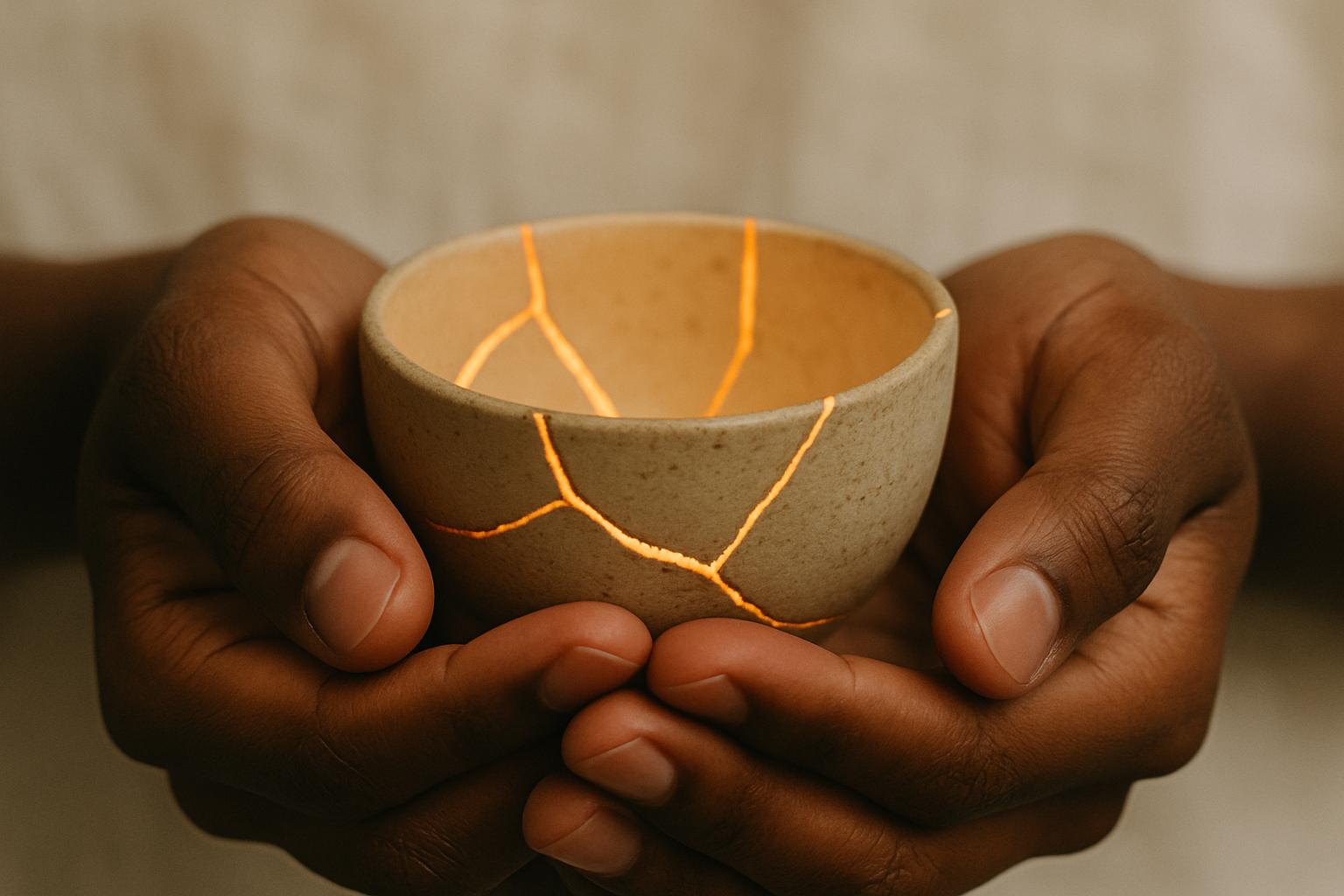
Moral Injury as a Transpersonal “Soul Wound”
Moral Injury as a Transpersonal “Soul Wound”
Why PTSD Needs an Update — and Why It Matters
Most people think of PTSD as a fear-based reaction to danger. And that’s true—for one kind of trauma. But there is another category the diagnostic system consistently overlooks: the deep, internal, self-directed suffering known as moral injury.
It’s time we name it for what it is: Internally-Directed Post-Traumatic Stress (PTS-I).
PTS-E vs. PTS-I: Two Different Trauma Paths
All trauma begins with an overwhelming event. But what happens inside a person can look radically different depending on the nature of that event.
PTS-E (externally-directed PTS) • rooted in fear, terror, and threat • driven by amygdala-based fear conditioning • responds well to fear-focused PTSD treatments
PTS-I (internally-directed PTS) • rooted in guilt, shame, self-condemnation, or moral conflict • activates self-referential neural networks • often requires relational, existential, and spiritual interventions
Both come from trauma. They just take different pathways through the nervous system, psyche, and sense of self.
A brief note: This distinction does not replace other important trauma pathways. Complex PTSD (CPTSD), for example, involves chronic relational trauma and developmental disruption—a different category not covered in this particular newsletter.
What Makes Moral Injury Unique
Moral injury occurs when someone does, witnesses, or is unable to prevent something that violates their core values. It fractures meaning, identity, and belonging.
It often sounds like:
“I can’t forgive myself.”
“I don’t deserve to be here.”
“Something in me broke.”
This isn’t fear. This is identity rupture. This is the soul wound.
Traditional PTSD treatments rarely reach this layer because the injury isn’t in the fear circuitry. It’s in the realm of morality, conscience, and worthiness.
Why PTS-I Needs to Be in the DSM
Recognizing PTS-I as its own category would:
1. Improve diagnostic clarity People with moral injury are often misdiagnosed with PTSD, depression, or personality disorders.
2. Expand access to appropriate care A DSM category enables insurance coverage for therapies targeting guilt, shame, and spiritual fragmentation.
3. Reduce stigma Many organizations now use the term Post-Traumatic Stress Injury (PTSI) instead of “disorder,” emphasizing that trauma is a wound, not a defect. The PTS-E / PTS-I distinction builds on this reframing by clarifying how the injury manifests.
4. Advance research A formal diagnosis opens the door to validated assessment tools, neuroscience studies, and new therapeutic modalities.
Healing a Soul-Level Wound Requires Soul-Level Tools
Because PTS-I disrupts meaning and identity, it often requires approaches that reach beyond cognition:
spiritually integrated therapies
somatic and embodied practices
moral repair frameworks
relational and community-based healing
non-ordinary states of consciousness (breathwork, meditation, psychedelic-assisted therapies)
These modalities can reconnect people with inherent worth and belonging—the very capacities moral injury erodes.
A Simple, Transformative Reframe
Here’s the core proposal:
Post-Traumatic Stress has two primary pathways related to how traumatic stress is internalized:
PTS-E: fear-driven
PTS-I: shame- and morality-driven (moral injury)
Importantly, both PTS-E and PTS-I can emerge from single incidents or from repeated exposures over time — for example, repeated life-threatening missions or repeated morally injurious situations in military, medical, or humanitarian contexts.
This model focuses on the internal mechanisms of event-based or occupational trauma. Other trauma pathways, such as Complex PTSD, arise from chronic relational or developmental wounding and reflect a different etiology not addressed in this particular newsletter.
Both are real. Both are valid. Both need different kinds of care.
This shift would revolutionize trauma treatment and finally give millions of veterans, healthcare workers, first responders, and civilians language that reflects their actual experience.
A Closing Thought
Fear wounds the nervous system. Moral injury wounds the self.
If PTS-E tells the story of survival, PTS-I tells the story of the soul.
Naming it is the first step toward healing it—fully, compassionately, and in community.
This is your invitation to join us on this journey of transformation, healing, and friendship that transcends boundaries!
Be part of Amistar's journey! Support our mission of cultivating wellness, nurturing friendships, and building resilient communities in harmony with nature.
Your involvement, whether through sharing this vision, cheering us on, or providing a loan or grant, will help shape a future of deep connection to the Earth and to each other. A future in which we thrive, not just survive.
PLEASE REACH OUT!
If you can make introductions, desire more details, or have ideas to share. Together, let us create a legacy of positive change.
With heartfelt gratitude,
Abi Dorhosti, Lt Col (Ret), USAF



© 2023 – Amistar Foundation. All rights reserved.